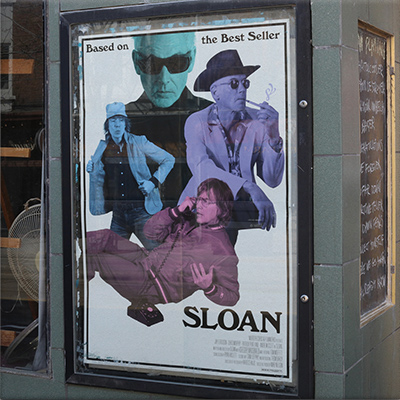
SLOAN
When attempting to provide an overview of a big story – one that encompasses both the myriad achievements of its subjects over a span of several decades and the impacts of those achievements – you can take two routes. There’s the “just the facts” approach, where you list off the people, places, and things that populate the tale, and then there’s another road that winds through the hows and whys behind the names and numbers. Looking at the story of Canadian indie rock institution Sloan, the temptation to look through both lenses is strong.
For those who prefer the factual take, there are certainly enough noteworthy events and experiences peppered through the band’s over 30-year history to make for a good yarn. There are the various musical incarnations that flowered in the rather fertile indie music scene in the Halifax, Nova Scotia of the late 1980s and early 1990s that brought bassist and vocalist Chris Murphy, guitarists/vocalists Jay Ferguson and Patrick Pentland, and drummer/vocalist Andrew Scott together – bands such as The Deluxe Boys, Happy Co., No Damn Fears and Kearney Lake Road that anyone of a certain vintage who hails from the Canadian coastal city will recall fondly.
There’s the first recorded appearance in 1991 of what could be their earliest signature tune, “Underwhelmed,” that landed on a very hard-to-find compilation of Halifax acts called Hear and Now, which – combined with a chaotic but explosive self-promoted showcase during a Halifax music festival – brought them to the attention of various record labels, including the label du jour of the early 1990s, Geffen Records imprint DGC.
That tidbit leads to the next chain of events – signing to DGC and releasing their first album, 1992’s Smeared, recorded in the same home studio of Halifax producer Terry Pulliam as the Hear and Now session at roughly the same time, but preceding that with their own indie release, the Peppermint EP, on their own label, murderecords. Propelled by support from a newly influential network of college radio stations and indie-friendly print publications, the band toured the U.S. and Canada before setting up shop in New York City to record their second full-length, Twice Removed, with producer Jim Rondinelli.
And here we have the first big plot twist of the fact-based version of the Sloan story. Somewhat bored with the shoegazey, Abba-meets-My Bloody Valentine approach to their songwriting that was so well documented on Smeared, and immersing themselves in the bare-boned sonic templates of The Beatles’ “White Album” and Fleetwood Mac’s Rumours while traversing the continent in tour vans, the band turned in to DGC an album that was stripped of the manic, fizzy energy of the debut – replaced with a clarity and cleverness that augmented the catchiness of such songs as “Coax Me”, “Snowsuit Sound” and “People of the Sky”. But that approach flew in the face of what was “shifting units” at the time, and DGC was, to use a predictable pun, underwhelmed by an album that would go on to be named “the best Canadian album of all time” by Canada’s Chart Magazine.